What a 400 A rating does—and does not—say
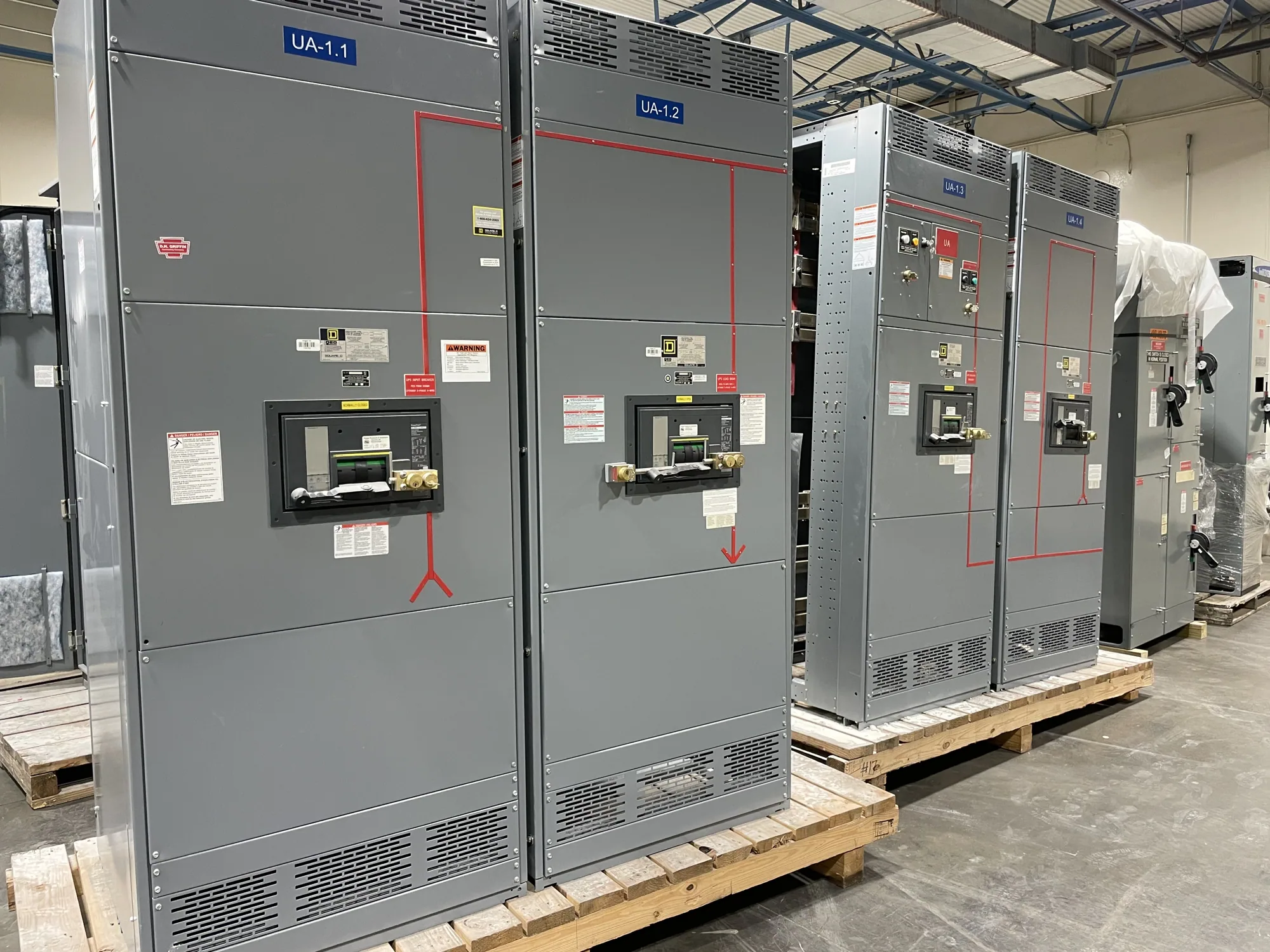
For a particular assembly, 400 A may identify its nominal continuous-current rating when that value is stated in the equipment documentation. It describes a rating assigned to the specified design, not a promise that every installation can carry a 400 A load in every condition. Confirm what the manufacturer rates at 400 A: the main bus, a main device, the assembly, or more than one of these.
Keep the equipment rating separate from the building's calculated demand. Demand is established from the expected loads and applicable engineering and code considerations. A 400 A designation does not prove that the connected load is appropriate, nor does it establish the rating of every feeder breaker or switch. Review the complete assembly drawing, nameplate information and device schedule to understand the limits and interfaces.
Fit the assembly to the actual distribution role
A 400 A assembly may be considered for a smaller service or feeder-distribution application, but the project must define its role. Is it the service equipment, a downstream distribution point, or one section in a larger system? Confirm the source, voltage, phases and conductors, grounding arrangement, incoming connection, outgoing circuits, and whether a main device is required. These details shape the arrangement as much as the ampere designation.
For example, consider a hypothetical facility whose engineer is evaluating a 400 A distribution assembly for several feeders. The engineer would compare a documented load schedule and calculated demand with the proposed bus and main-device ratings, then check each feeder's required overcurrent protection and load. The example does not establish that 400 A is suitable; the actual design, application and governing review determine that.
Distinguish bus, devices and fault-current capability
The main bus rating and the ratings of installed protective devices are related but not interchangeable. A 400 A bus does not mean that each outgoing circuit is rated 400 A, and a 400 A main device does not, by itself, describe the assembly's other ratings. Ask for the proposed one-line diagram and device schedule so the engineer can check the complete current path, circuit count, feeder requirements and coordination with upstream and downstream equipment.
Short-circuit capability is a separate selection issue. The available fault current at the installation point and the protection scheme must be evaluated against the equipment's specified short-circuit ratings and configuration. A 400 A continuous-current value says nothing by itself about fault-current withstand or interrupting capability. Provide the current short-circuit study or the information needed to complete one, and have the responsible engineer verify the applicable ratings for the actual assembly.
Account for operating conditions and future loads
Installation conditions can affect which design is suitable. Share the expected ambient conditions, indoor or outdoor location, enclosure needs, available space, access and cable-entry constraints, and any environmental exposures. Ask the manufacturer and project engineer to confirm how the proposed configuration and applicable installation conditions relate to its documented ratings. Do not assume a nameplate value remains applicable under conditions the assembly was not specified for.
Future load uncertainty deserves a focused review rather than an arbitrary allowance. Identify planned equipment, anticipated expansion, spare feeder positions and the time horizon for growth. Spare physical space is not the same as available electrical capacity. The engineer should assess likely demand and system changes against the proposed bus, devices, conductors and upstream supply. If the 400 A selection leaves little room for credible growth, compare suitable alternatives before the equipment design is finalized.
Provide a reviewable specification package
For a useful manufacturer review, provide the load schedule, system voltage, one-line diagram, feeder list, required main and branch devices, short-circuit study information, and the intended service or distribution role. Include site conditions, enclosure and access constraints, cable-entry preferences, project schedule, and any applicable project specifications. Flag open engineering decisions rather than leaving assumptions implicit. Clear inputs make it easier to identify what is defined and what needs confirmation.
Request the proposed assembly documentation and verify that it addresses the required continuous-current rating, device ratings, fault-current requirements, configuration and project interfaces. Applicable codes, standards, ratings and any assembly listing must be confirmed for the specific design; do not assume one designation establishes compliance. Qualified personnel should perform installation, testing and maintenance under applicable safety procedures, with the project engineer responsible for final equipment selection and coordination.
Confirm the design before ordering
South Carolina Switchgear Builders manufactures new switchgear and switchboards to specification, with US-built equipment, all-American components and nationwide shipping. Availability and actual lead times depend on the order and must be confirmed. A 400 A label is only one input to a sound selection; the final decision should follow review of the loads, system conditions, protective devices and documented assembly ratings. Submit a complete project package so the proposed equipment can be evaluated against the requirements before the order is placed.