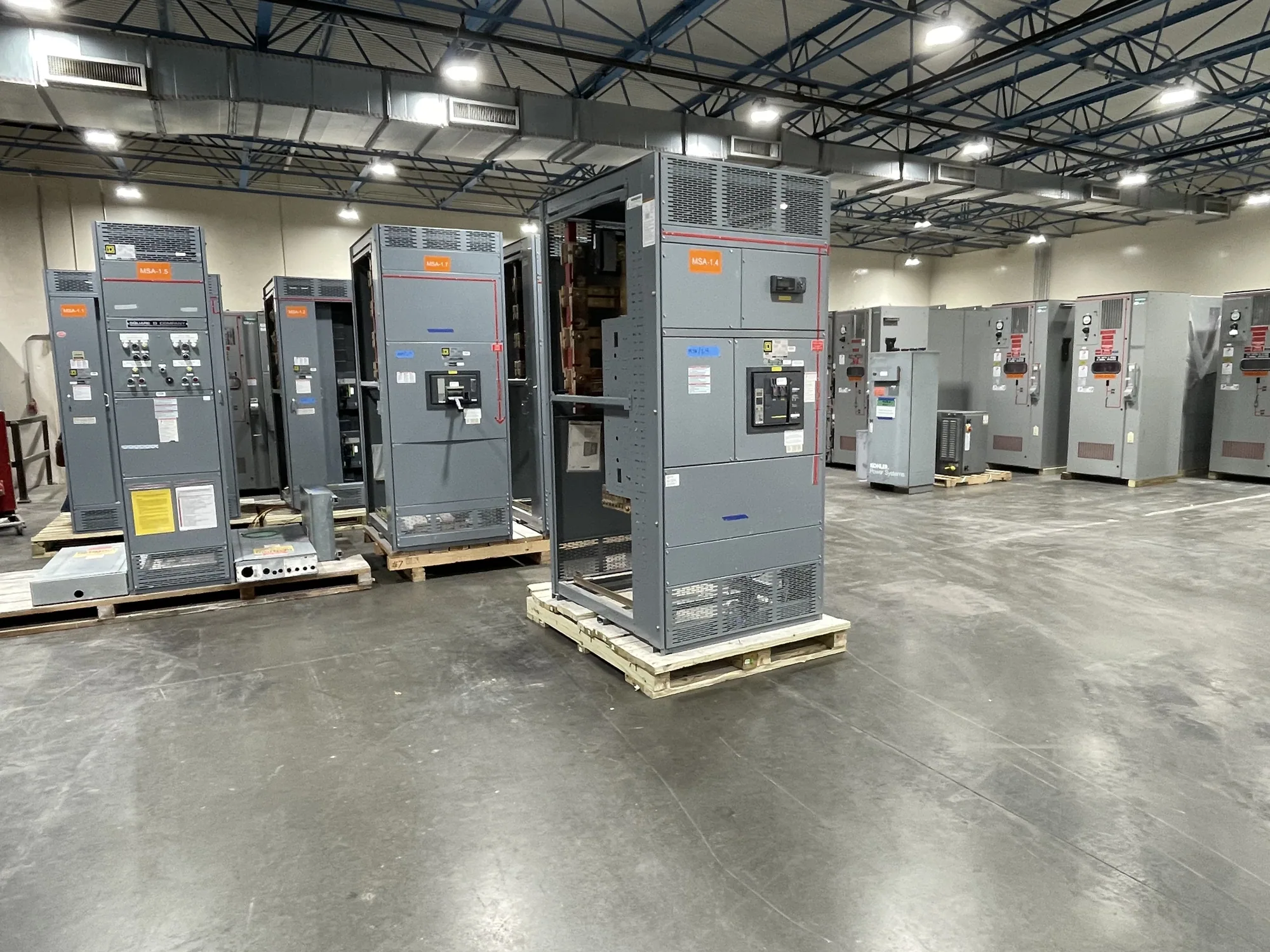
What a 600 A rating tells you
A 600 A switchgear current rating generally identifies a nominal continuous-current value for the assembly, when that value is supported by its specific nameplate and manufacturer documentation. It does not by itself establish how much load a facility can serve, whether a particular main or feeder device is suitable, or whether the complete equipment lineup fits the installation. The responsible project engineer must evaluate the actual design and application.
Keep the equipment’s continuous-current rating distinct from calculated demand, individual protective-device ratings and available fault current. These describe different aspects of the system. A lineup labeled 600 A is not a promise that every combination of connected loads can operate at that current in every environment. Confirm the rating basis, conditions of use and applicable documentation for the exact assembly being considered.
Begin with demand and feeder mix
Consider a hypothetical project with a calculated demand that appears to leave margin below 600 A. That comparison is a useful starting point, not a complete selection. The load schedule may include feeders with different expected operating patterns, motor starting or other characteristics that the engineer must evaluate. The sum of device ratings is not automatically equal to coincident demand, and a demand estimate does not replace review of the bus and protective devices.
Feeder mix shapes the practical choice. Identify the number and type of outgoing circuits, the required protective devices, their ratings, and whether future connections are part of the defined scope. The engineer should check how those devices fit the proposed assembly and how expected loading is distributed. A 600 A bus rating may be appropriate in one design and insufficient in another, even when the headline demand figures look similar.
Separate bus, device and fault ratings
Ask the manufacturer to document the main bus rating and the ratings of the proposed main and feeder devices. The bus rating describes a different component of the assembly than a breaker rating, and neither should be inferred from the other. Verify the exact equipment configuration, including any design-dependent conditions that affect ratings, against manufacturer documentation. Do not treat a familiar catalog description as proof that a custom lineup has the required characteristics.
Short-circuit capability is a separate selection question. The available fault current at the installation and the project’s coordination requirements inform the required equipment and device ratings; the 600 A continuous-current value does not answer either question. Provide the applicable short-circuit study or design information for review. The responsible engineer must confirm the proposed assembly against the project’s fault-duty requirements and applicable codes, rather than assuming a rating from the ampere value.
Account for margin and installation conditions
Compare expected demand with the selected continuous-current rating using the project’s documented assumptions. Margin is not an arbitrary allowance: it depends on the load forecast, operating profile, planned expansion and the engineer’s design criteria. If measured load data is available, explain its source and operating period, and identify loads that may not have been present during measurement. A single snapshot may not represent the eventual facility demand.
Environmental and installation conditions can also affect equipment selection. Share the intended indoor or outdoor application, ambient conditions, enclosure and space constraints, and any other project-specific conditions that the manufacturer needs to evaluate. Applicable requirements and ratings must be confirmed for the actual design. Qualified personnel should handle installation, testing and maintenance under the project’s safety procedures; current-rating review is not a substitute for safe work planning.
Choose equipment class and configuration
Specify the system voltage and intended equipment class rather than relying on “600 A” alone. Current rating does not tell a supplier whether the project calls for low-voltage switchgear, a switchboard or another assembly. Describe the one-line diagram, source arrangement, main-device expectations and outgoing feeder requirements. The project engineer should confirm the equipment type and interfaces, including any metering or control needs, against the system design.
For new equipment, the manufacturer can develop a configuration to specification, subject to review of the complete requirements. Any listing, assembly rating, testing, applicable standard and delivery timing must be confirmed for the particular proposed design and order. If the project has a required documentation package or submittal process, identify it early so the equipment proposal and engineering review can address the right scope.
Information to provide for a sound selection
For an initial review, provide the load schedule and demand basis, system voltage, one-line diagram, feeder list, main and feeder device requirements, environmental conditions and available short-circuit study. Identify expected future loads, site constraints and any specified documentation or standards. Note which values are established and which remain provisional. This helps distinguish a firm design requirement from an early planning assumption and focuses review on issues that could change the equipment selection.
Ask the responsible engineer to confirm whether a 600 A continuous-current assembly suits the documented demand and feeder mix, and to verify the bus, devices, fault-duty requirements and installation conditions. South Carolina Switchgear Builders manufactures new equipment to specification, with US-built equipment and nationwide shipping; availability and actual lead times depend on the order and require confirmation. A complete, reviewed requirement set is the practical next step toward a configuration that fits the project.