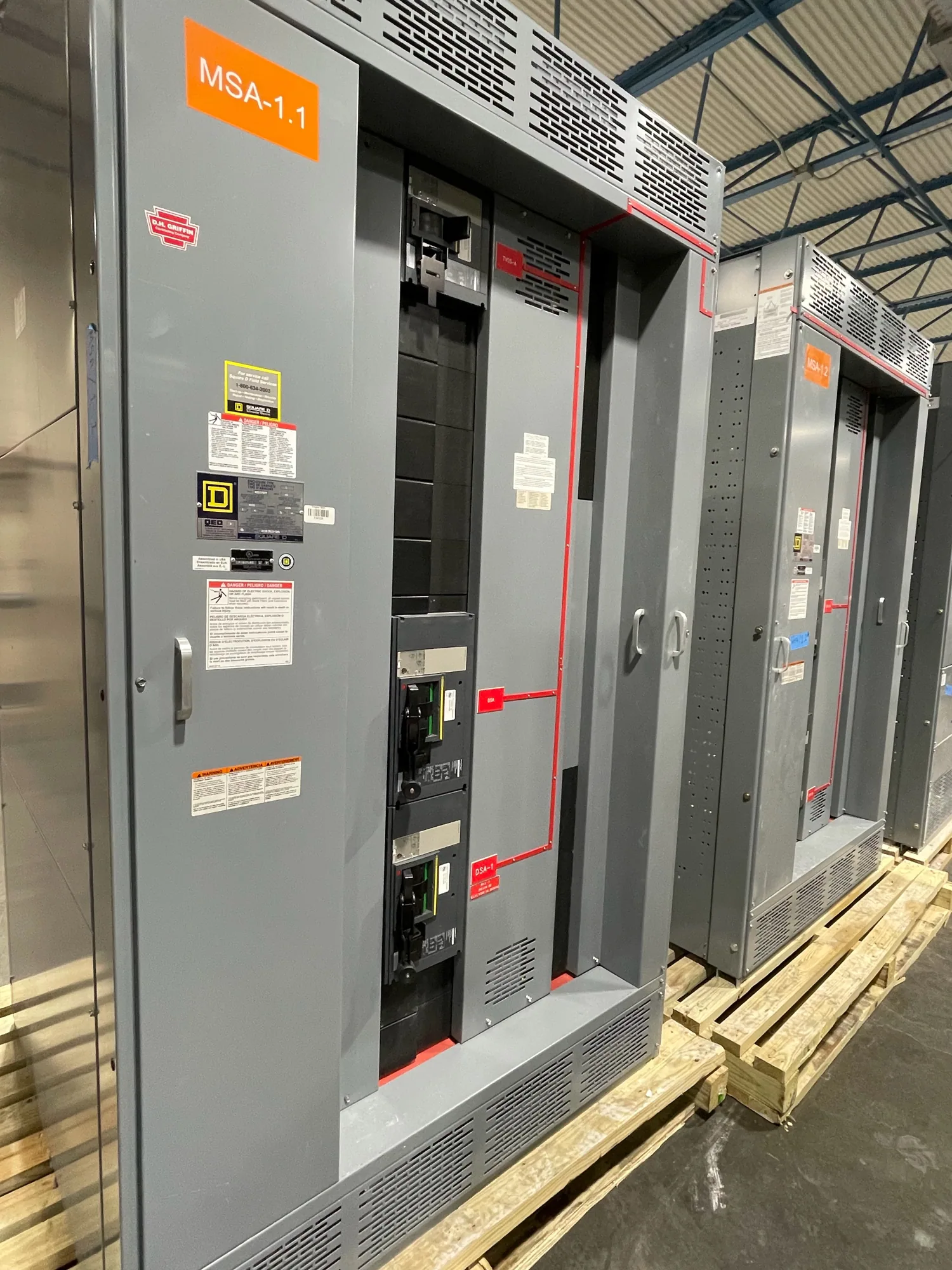
What an 800 A designation tells you
For an 800 A switchgear assembly, the designation generally refers to a nominal continuous-current value, but the assembly documentation must confirm exactly what is rated and under what conditions. It is not a promise that any load totaling 800 A can be connected without further review, nor does it by itself establish the rating of every bus, breaker, feeder, or connection.
Selection begins with the installation’s actual electrical design. The responsible engineer evaluates the calculated demand and applicable requirements, then checks that the proposed assembly and its components suit the system. The 800 A figure is a useful specification point, not a substitute for load analysis, equipment coordination, or review of the final manufacturer documents.
Connect calculated demand to the bus
Consider a hypothetical project where an engineer’s load schedule produces demand near the range being considered for an 800 A assembly. That estimate needs context: which loads operate together, which are intermittent, and which assumptions govern diversity? The engineer should document those assumptions rather than treating nameplate totals or a single snapshot of operating current as the full design basis.
The main bus rating must be confirmed for the specific assembly and installation conditions. A main protective device, if included, has its own rating and function; its rating does not automatically define the capability of every downstream circuit. Likewise, individual feeder devices and conductors must be selected for their assigned loads and project requirements. The buyer should request documentation that clearly identifies these ratings and interfaces.
Account for motor starts and feeder diversity
Motor starting can produce current demands that differ from normal running conditions. The engineer should identify larger motors, starting methods, expected starting frequency, sequencing, and whether multiple motors could start at the same time. These facts help determine whether the design assumptions are credible and whether the selected protective devices and source can accommodate the intended operation.
Diversity should reflect how equipment will actually be controlled and used. If a load schedule assumes that certain feeders will not run together, provide the operating or interlock basis for that assumption. If operating changes could remove that limitation, the design team should account for the possible concurrent load. The goal is not to inflate or reduce the rating by rule of thumb, but to base the selection on the documented duty.
Separate continuous current from fault duty
An 800 A continuous-current designation does not state how much fault current the assembly can withstand or interrupt. Short-circuit ratings and device interrupting ratings address different conditions and must be checked against the available fault current and the project’s protective-device arrangement. The responsible engineer should use the applicable study and confirm the required ratings for the specific equipment configuration.
Also review the system voltage and the intended equipment class. Voltage, bus arrangement, incoming source, feeder count, enclosure, and space constraints can affect the proposed configuration. For low-voltage equipment, confirm whether the requested product is a switchboard or switchgear and specify it consistently; do not assume their construction or applicable listing requirements are interchangeable. Any standard or listing applicability must be verified for the actual design.
Check conditions at the installation
Environmental and installation details belong in the equipment specification, not in an afterthought. Share the intended indoor or outdoor setting, ambient conditions, elevation if relevant to the design review, available space, cable entry preferences, and any known contamination or moisture concerns. The manufacturer and project engineer can determine which details affect the assembly and what documentation is needed to resolve them.
These conditions can influence component selection and the confirmation of ratings. Do not infer that an 800 A label applies unchanged under every installation condition. Ask for the manufacturer’s documentation for the proposed assembly, including any applicable conditions, limitations, and component schedules. The project engineer should reconcile those documents with the site design before equipment is approved.
Prepare a useful equipment request
For a focused quotation and engineering review, provide the load schedule with normal and starting loads identified, system voltage, source information, feeder list, protective-device requirements, and the available short-circuit study. Include the desired bus and main-device arrangement, enclosure and installation conditions, drawings or one-line diagrams, and any applicable project specifications. Note unresolved assumptions so reviewers can identify what needs confirmation.
South Carolina Switchgear Builders manufactures new switchgear and switchboards to specification, with US-built equipment, all-American components, and nationwide shipping. Availability and actual lead times depend on the order and must be confirmed. After reviewing the request, the equipment configuration, ratings, applicable listing, documentation, and delivery details should be confirmed against the final project specification.
Confirm the selection before release
Before purchase and release for manufacture, have the responsible project engineer verify that calculated demand, motor-start assumptions, bus and device ratings, short-circuit requirements, and installation conditions align with the proposed assembly. Resolve discrepancies between the one-line diagram, load schedule, and equipment documents before approval. Installation, testing, and maintenance should be performed by qualified personnel following applicable safety procedures.
A well-supported 800 A selection is therefore more than a match between a number on a load estimate and a nameplate. It is a documented decision connecting operating assumptions to the assembly’s confirmed ratings and project interfaces. Providing complete design information early gives the manufacturer and project team a sound basis to review the specification and finalize appropriate new equipment.